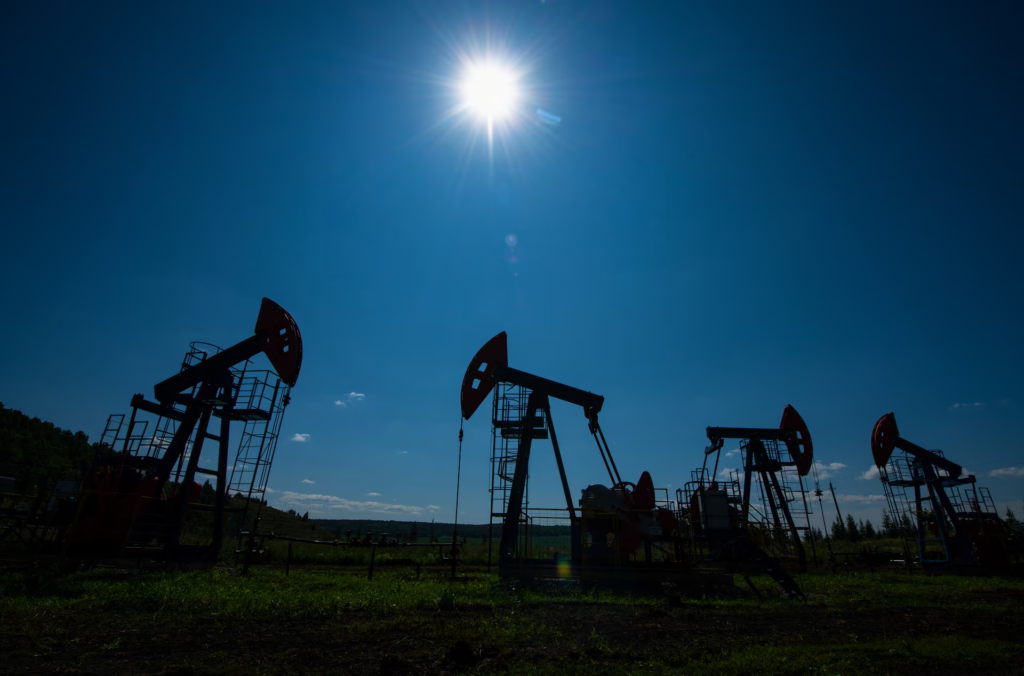
Global oil prices fell sharply in 2025, recording their steepest annual decline since 2020, as concerns over oversupply outweighed geopolitical risks and sanctions-related disruptions.
Brent crude futures ended the year down nearly 19%, marking their third consecutive annual loss — the longest such streak on record. U.S. West Texas Intermediate (WTI) crude also declined by almost 20% over the year. On the final trading day, Brent settled at USD 60.85 a barrel, while WTI closed at USD 57.42.
Analysts attribute the downturn primarily to rising supply and subdued demand growth. BNP Paribas commodities analyst Jason Ying said Brent prices could fall to around USD 55 per barrel in the first quarter before stabilising near USD 60 for the remainder of 2026, as supply growth normalises and demand remains flat. He noted that U.S. shale producers had hedged production at higher prices, making supply less sensitive to price fluctuations.
Data from the U.S. Energy Information Administration showed a mixed outlook. While U.S. crude inventories fell by 1.9 million barrels in the final week of December, gasoline and distillate stocks rose well above expectations. U.S. oil production also reached a record high in October.
Oil markets experienced volatility throughout the year due to geopolitical tensions, including the war in Ukraine, disruptions to Russian and Kazakh oil infrastructure, Middle East conflicts affecting shipping routes, and sanctions on Russia, Iran, and Venezuela. Early in 2025, prices rose briefly following tougher U.S. sanctions imposed on Russia.
However, prices eased as OPEC+ accelerated output increases, releasing nearly 2.9 million barrels per day into the market since April. The group later paused further output hikes for the first quarter of 2026. Analysts widely expect global oil supply to exceed demand next year, with surplus estimates ranging from 2 million to nearly 4 million barrels per day.
Morgan Stanley’s global oil strategist Martijn Rats said deeper price declines could prompt OPEC+ to cut production, though current prices may lead the group to continue unwinding existing cuts after the pause.
Despite bearish fundamentals, some analysts caution that geopolitical risks could still support prices. “Market fundamentals point to oversupply, but geopolitical tensions and policy uncertainties remain significant factors,” said John Driscoll of JTD Energy.
The next OPEC+ meeting is scheduled for January 4.
Source: Reuters