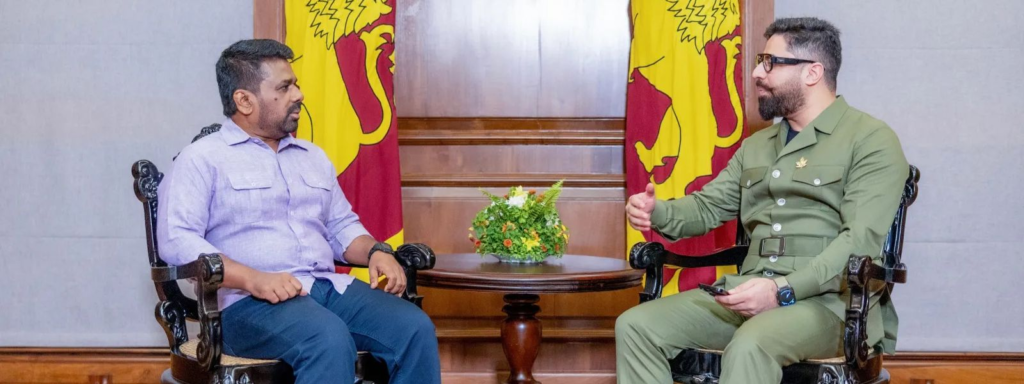
Facing mounting criticism over the government’s handling of Cyclone Ditwah, President Anura Kumara Dissanayake acknowledged significant gaps in disaster preparedness and relief coordination, while outlining an ambitious plan to modernize Sri Lanka’s climate resilience and emergency response systems.
In an interview with Newsweek, the President described Cyclone Ditwah as “catastrophic — lives lost, villages submerged, infrastructure torn apart”, noting that the armed forces, police, local authorities, and international partners mobilized rapidly in the aftermath. However, he stressed that “meaningful criticism” was both expected and necessary to drive reforms.
“We are in government and we want to fix the problems.”
— President Anura Kumara Dissanayake
Major Reforms Announced
The President unveiled plans to establish a National Disaster Management Authority (NDMA) — a central body equipped with real authority, adequate resources, and legal powers to coordinate national disaster response.
He outlined several key priorities:
- Enhancing weather forecasting through improved radar coverage
- Pre-positioning rescue equipment and emergency supplies in high-risk areas
- Mapping landslide-prone zones across the central highlands
- Strengthening land-use enforcement and local preparedness mechanisms
Dissanayake admitted that years of under-preparation had left communities dangerously exposed to severe weather. With climate change accelerating the frequency and intensity of storms, he noted that destruction of this magnitude was predictable.
“For years and years Sri Lanka has failed to prepare adequately.”
Breaking the Cycle of Disaster and Recovery
Addressing concerns that Sri Lanka risks being caught in a perpetual cycle of rebuilding, the President warned:
“We will be trapped if we don’t act now.”
He emphasized that although Sri Lanka contributes only minimally to global greenhouse gas emissions, it suffers disproportionately from climate-driven disasters that undermine development gains.
The government’s long-term strategy focuses on:
- Climate-resilient infrastructure — higher upfront investment, but significantly reduced long-term losses
- Economic diversification — digital economy, IT services, light manufacturing, and climate-resilient sectors
- Technology partnerships — improving early evacuation systems and asset protection
- Nature-based solutions — mangrove restoration, reforestation, and wetland conservation
International Support and Partnerships
President Dissanayake acknowledged India’s rapid response under Operation Sagar Bandhu, highlighting the deployment of aircraft, MI-17 helicopters, naval assets including aircraft carrier INS Vikrant, and specialised NDRF teams.
He also thanked Pakistan and the Maldives for their timely support, adding that broader international solidarity had been vital during the crisis.
“We can’t afford to be dependent on any single partner.”
“Our future depends on productive relationships with all who contribute to sustainable development, growth, and prosperity.”
A Transformational Rebuild
Looking ahead, the President vowed that the reconstruction process will be both urgent and transformative.
“At least now, our government will work with all partners to put effective, efficient, and accountable systems in place. We will rebuild Sri Lanka, better than it was before.”