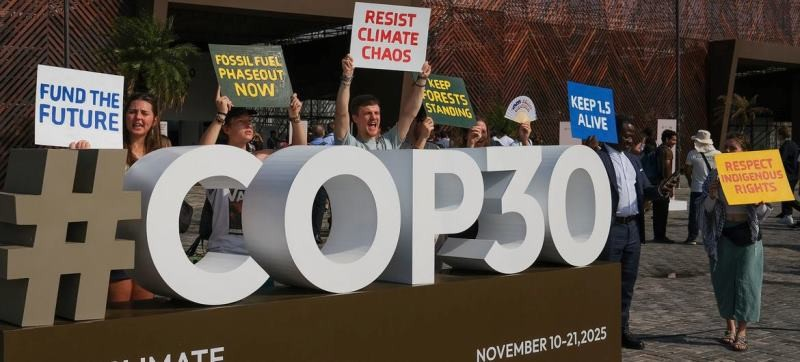
Brazil’s COP30 presidency pushed through a compromise climate agreement on Saturday, securing increased financial support for vulnerable nations while avoiding any reference to phasing out fossil fuels — the primary driver of global warming.
The deal was adopted in Belem after extended negotiations marked by disputes among delegates over the future direction of global climate action. Notably, the United States — the world’s largest historical emitter — did not send an official delegation.
UNFCCC Executive Secretary Simon Stiell acknowledged the agreement’s shortcomings but praised delegates for reaching consensus in what he described as a year marked by “denial and division.”
“I’m not saying we’re winning the climate fight. But we are undeniably still in it, and we are fighting back,” Stiell said.
COP30 President Andre Correa do Lago admitted the talks had been difficult, noting that several nations had sought stronger commitments.
Deep Divisions Over Fossil Fuels
Latin American nations Colombia, Panama, and Uruguay strongly objected to the absence of language addressing fossil fuel use. Colombia’s negotiator said her country could not support a deal “that ignored science,” describing the agreement as “a consensus imposed under climate denialism.”
The debate grew tense when Russia’s delegate accused objecting countries of “behaving like children,” prompting uproar from Latin American representatives.
A compromise was reached after procedural consultations, and the deal was gaveled through unchanged. The European Union, despite reservations, agreed not to block the agreement, saying it “goes in the right direction.”
Funding Commitments Highlighted
A key component of the deal is a call for wealthy nations to triple adaptation financing for developing countries by 2035. The agreement also launches a voluntary initiative to accelerate climate action and help countries meet existing emissions targets.
Developing nations, facing rising sea levels and intensifying disasters, stressed that faster access to funds remains critical. Avinash Persaud of the Inter-American Development Bank said the increased focus on finance was welcome but warned that support for “loss and damage” still fell short.
Sierra Leone and other countries also raised concerns about indicators included in the agreement, saying they were “unclear, unmeasurable, and unusable.”
Side Text Issued on Fossil Fuels, Forest Protection
Due to the lack of consensus, Brazil issued a separate side document — not included in the main deal — addressing fossil fuels and forest protection. Correa do Lago encouraged nations to continue discussions on these unresolved issues.
The agreement also initiates a process to align global trade practices with climate action amid concerns that rising trade barriers may hinder the transition to clean technologies.